Address
Madhobdi, Narsingdi.
Work Hours
Monday to Friday: 9AM - 7PM
Weekend: 10AM - 5PM
Address
Madhobdi, Narsingdi.
Work Hours
Monday to Friday: 9AM - 7PM
Weekend: 10AM - 5PM
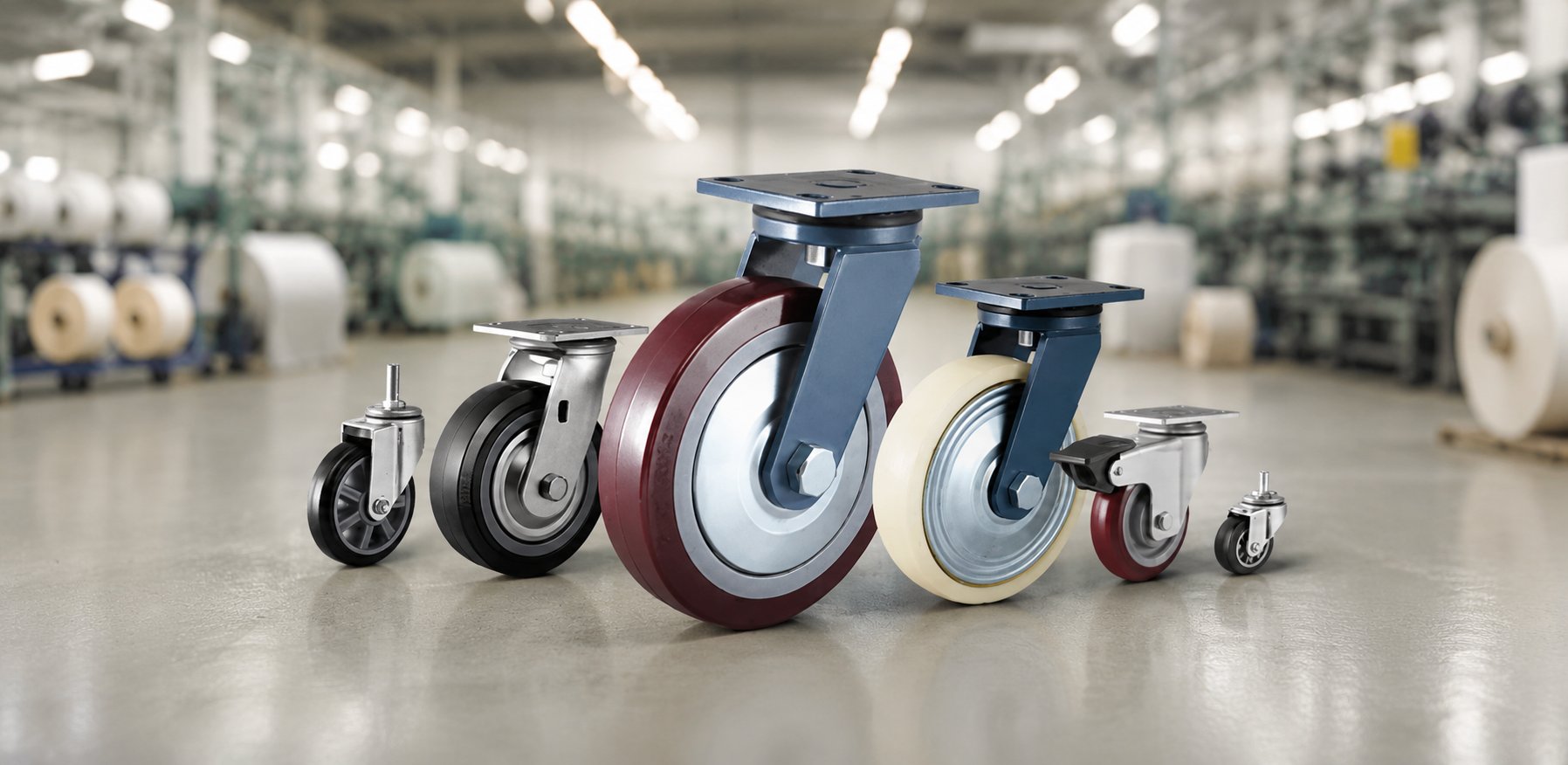
Explore the latest castor wheel prices in Bangladesh. Compare PU, Nylon, Rubber, UHMWPE.
 Byahebd
When you are searching for Castor Wheel Price in Bangladesh, whether you operate a textile mill in Narsingdi, a garment factory in Gazipur, a pharmaceutical plant in Dhaka, or a warehouse in Chattogram, choosing the right castor wheel can significantly improve productivity, reduce maintenance costs, and ensure smooth material handling.
Industrial trolleys, machine bases, mobile workstations, fabric transport carts, pallet carts, and warehouse equipment all rely on high-quality castor wheels to move heavy loads safely and efficiently. Unfortunately, many businesses in Bangladesh purchase low-quality wheels based only on price, leading to frequent failures, floor damage, increased downtime, and higher replacement costs.
This comprehensive guide explains everything you need to know about castor wheel prices in Bangladesh, including the different wheel materials, applications, factors that influence pricing, and how to choose the right wheel for your industry.
Whether you’re looking for heavy-duty castor wheels, trolley wheels, PU wheels, nylon wheels, UHMWPE wheels, or rubber caster wheels, this guide will help you make an informed purchasing decision.
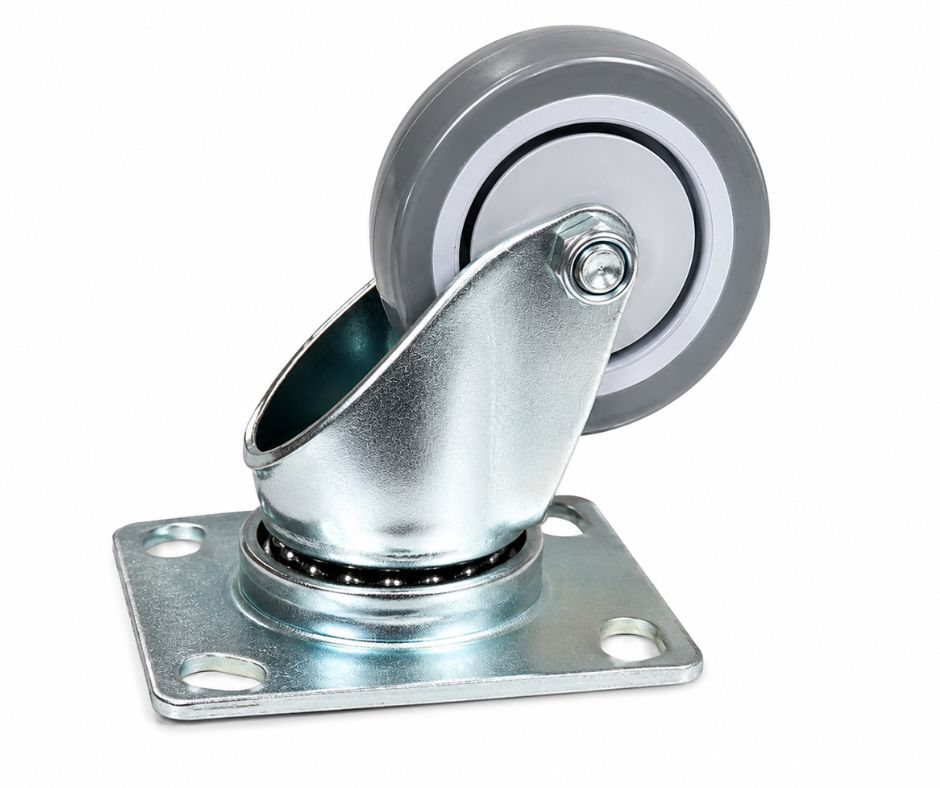
A castor wheel is a wheel mounted to a fixed or swivel bracket that allows equipment, trolleys, carts, and machinery to move easily. These wheels are widely used in industries where materials need to be transported efficiently while minimizing manual effort.
Unlike ordinary wheels, industrial castor wheels are engineered to support heavy loads, withstand continuous use, and operate reliably in demanding environments such as textile mills, warehouses, food processing plants, pharmaceutical factories, and engineering workshops.
Industrial castor wheels generally consist of:
The right combination of these components determines the wheel’s load capacity, durability, and performance.

Many buyers compare prices without considering long-term operating costs. A cheaper wheel may seem attractive initially, but poor-quality wheels often wear out quickly, damage floors, and require frequent replacement.
High-quality industrial castor wheels provide several advantages:
For factories operating 24 hours a day, investing in premium wheels is often more economical over the life of the equipment.
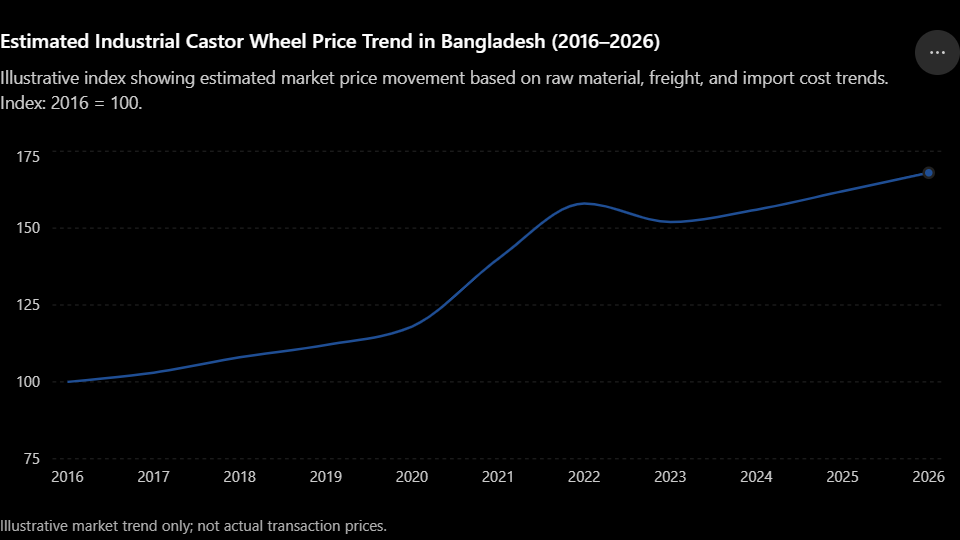
The price of a castor wheel depends on several factors, including wheel material, diameter, load capacity, bearing type, bracket thickness, country of origin, and whether the wheel is fixed or swivel.
Below are typical market price ranges in Bangladesh.
| Wheel Type | Approximate Price (BDT) |
|---|---|
| Light Duty Rubber Castor Wheel | ৳200 – ৳600 |
| Nylon Castor Wheel | ৳400 – ৳1,200 |
| Polyurethane (PU) Castor Wheel | ৳500 – ৳2,500 |
| Heavy Duty PU Castor Wheel | ৳1,500 – ৳5,000+ |
| UHMWPE Industrial Wheel | ৳800 – ৳3,500+ |
| Stainless Steel Castor Wheel | ৳1,200 – ৳6,000+ |
| High Capacity Industrial Castor | ৳3,000 – ৳12,000+ |
Note: Prices vary depending on wheel size, load rating, bearing quality, bracket design, and import source. For bulk orders or custom specifications, request a quotation from the supplier.
Understanding what influences pricing helps buyers select the best wheel for their application instead of choosing based solely on the lowest cost.
The wheel material is one of the biggest factors affecting performance and price.
Premium materials such as polyurethane and UHMWPE typically cost more but provide better durability, chemical resistance, and longer service life than standard rubber or plastic wheels.
Industrial wheels designed to carry 1,000 kg or more require stronger materials, thicker brackets, and heavy-duty bearings, making them more expensive than light-duty models.
High-quality bearings reduce rolling resistance and increase wheel lifespan. Common bearing types include:
Better bearings generally improve performance but increase cost.
Larger wheels roll more easily over uneven surfaces and carry heavier loads, but they also require more material and stronger construction, resulting in higher prices.
Heavy-duty pressed steel or forged steel brackets offer greater strength and durability than light-duty brackets. Galvanized or stainless-steel brackets also command a higher price because of their corrosion resistance.
Imported industrial castor wheels from countries such as Germany, Italy, Japan, South Korea, and China vary in price depending on manufacturing quality and brand reputation.
Selecting the correct wheel material is essential for maximizing performance and minimizing maintenance costs.
Polyurethane castor wheels are among the most popular choices for industrial applications because they combine strength with floor protection.
PU wheels are an excellent choice where both durability and floor protection are important.
Nylon wheels are known for their high strength and low rolling resistance.
Because of their hardness, nylon wheels perform best on smooth concrete or epoxy floors.
Ultra High Molecular Weight Polyethylene (UHMWPE) wheels are increasingly popular in Bangladesh’s textile industry due to their exceptional durability and resistance to chemicals and moisture.
These wheels are particularly suitable for environments where conventional materials wear out quickly.
Rubber wheels remain a practical choice where quiet operation and vibration absorption are priorities.
Cast iron wheels are built for extremely heavy industrial applications where floor protection is less important than maximum load capacity.
These wheels offer exceptional strength but are generally used only where the flooring can accommodate them.
Phenolic wheels are manufactured from compressed resin materials, offering excellent performance in dry industrial environments.
Selecting the right wheel material is the most important factor in determining the lifespan, performance, and maintenance cost of your trolley or equipment. Each material has unique advantages, making it suitable for different industrial environments.
Polyurethane (PU) castor wheels are among the most widely used industrial wheels because they combine strength, durability, and floor protection. They provide excellent traction while minimizing noise and vibration.
Nylon wheels are hard, durable, and ideal for heavy industrial loads. They roll easily on smooth surfaces and resist many industrial chemicals.

Ultra High Molecular Weight Polyethylene (UHMWPE) is a premium engineering plastic known for its exceptional wear resistance and low friction.
Because of its durability and performance, UHMWPE has become one of the preferred wheel materials for textile industries in Bangladesh.
Rubber wheels remain popular where vibration reduction and quiet movement are important.
Cast iron wheels are designed for extreme industrial environments where strength is more important than floor protection.
Understanding the difference between fixed and swivel castor wheels helps buyers select the correct configuration.
Swivel castors rotate 360 degrees, allowing equipment to move in any direction.
Fixed castors move only in a straight line.
Most industrial trolleys use two swivel castors and two fixed castors, providing an excellent balance between maneuverability and stability.
Every industry has different operating conditions. Selecting the wrong wheel can lead to premature wear, damaged floors, and increased maintenance costs.
Recommended Wheels:
Typical Uses:
Recommended Wheels:
Applications:
Recommended Wheels:
Applications:
Recommended Wheels:
Applications:
Recommended Wheels:
Applications:
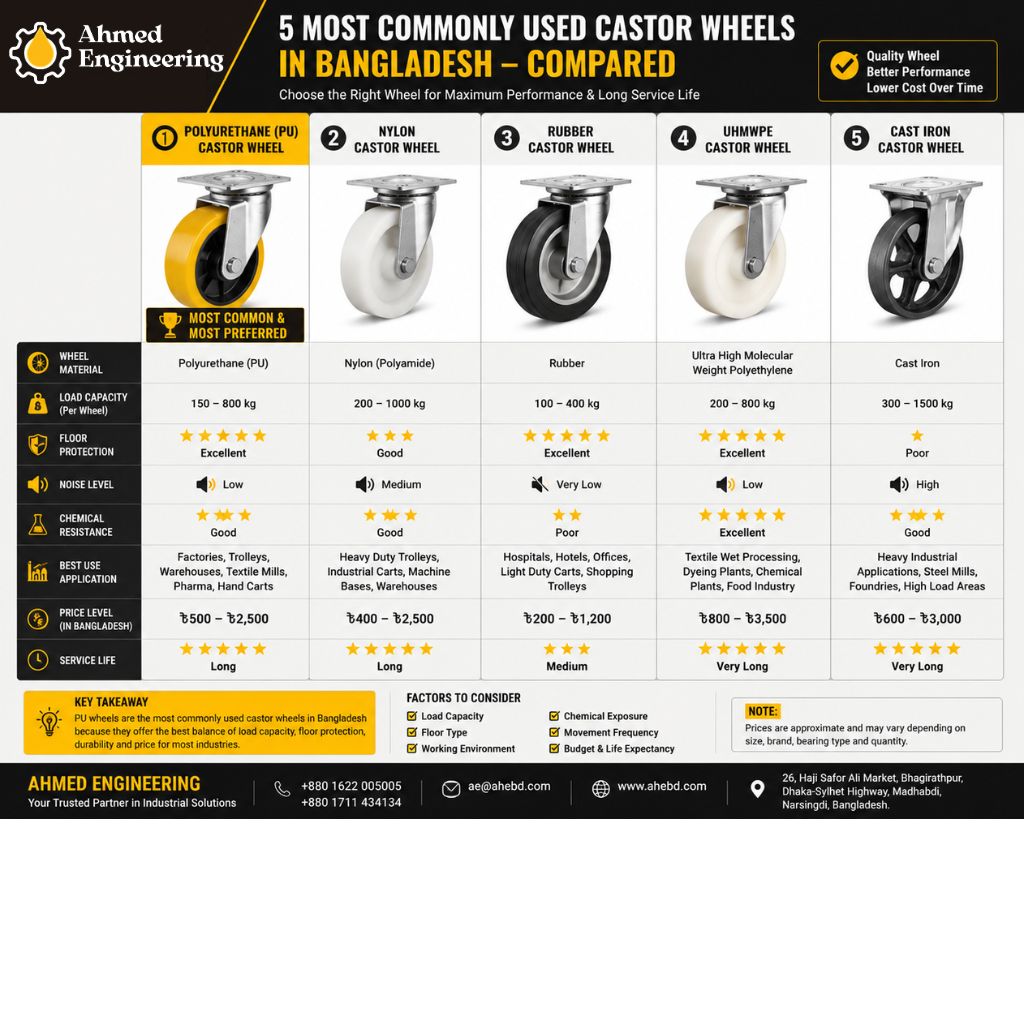
| Material | Load Capacity | Floor Protection | Chemical Resistance | Noise Level | Durability |
|---|---|---|---|---|---|
| PU | Excellent | Excellent | High | Very Low | Excellent |
| Nylon | Excellent | Medium | High | Medium | Excellent |
| UHMWPE | Excellent | Excellent | Excellent | Low | Excellent |
| Rubber | Medium | Excellent | Medium | Very Low | Good |
| Cast Iron | Very High | Poor | High | High | Excellent |
Heavy-duty castor wheels are specifically designed for industrial environments where equipment operates continuously and carries substantial loads.
Typical features include:
Typical Applications:
Choosing the correct load capacity is essential for safe operation.
Example:
Suppose your trolley weighs:
Total Weight = 600 kg
Using four wheels:
600 ÷ 4 = 150 kg per wheel
For safety, engineers generally recommend selecting wheels with at least 30–50% additional capacity to account for uneven loading and dynamic forces. In this example, wheels rated around 225–250 kg each would provide a suitable safety margin.
Industrial castor wheels are used throughout Bangladesh in a wide range of industries.
Applications include:
Used for:
Used on:
Used for:
Applications include:
Before purchasing castor wheels, ask the following questions:
Always calculate the total weight of the equipment and its typical load before selecting a wheel.
Chemical plants and textile dyeing units should prioritize chemically resistant materials such as UHMWPE or polyurethane.
If so, swivel castors provide better maneuverability. For straight-line movement over longer distances, fixed castors improve stability.
Equipment operating continuously should use premium industrial wheels rather than light-duty alternatives.
Many businesses focus only on the purchase price, but low-cost wheels often result in:
Investing in high-quality castor wheels typically reduces the total cost of ownership over time.
Ahmed Engineering has supplied industrial products and engineering solutions to factories in Bangladesh for decades. The company offers a wide selection of imported castor wheels and trolley wheels suitable for textile mills, warehouses, engineering workshops, and manufacturing industries.
Customers benefit from:
Many industrial buyers compare only the purchase price, but the true cost of a castor wheel includes its lifespan, maintenance requirements, impact on productivity, and protection of equipment and flooring.
A high-quality castor wheel can:
For factories operating around the clock, investing in premium industrial wheels often results in a lower total cost of ownership.
Even the best castor wheels require regular inspection to maximize their service life.
Dust, thread, fabric lint, and debris can wrap around the wheel and reduce performance. Clean the wheels regularly, especially in textile and garment factories.
Check for:
Replace worn bearings before they damage the wheel.
Regularly inspect:
Loose hardware can lead to premature failure and safety hazards.
Never exceed the rated load capacity. Overloading can deform the wheel, damage bearings, and shorten the lifespan of the castor.
Selecting the appropriate material is essential.
Avoid these common purchasing errors:
The lowest-priced wheel is rarely the most economical over its lifetime.
Hard wheels can damage delicate floors, while soft wheels may wear quickly under heavy loads.
Larger wheels generally roll more easily and handle uneven surfaces better.
Always account for dynamic loads and uneven weight distribution, not just the static weight of the equipment.
The bearing significantly affects rolling performance and durability.
Before placing an order, consider the following checklist:
✔ Total load capacity
✔ Wheel diameter
✔ Wheel width
✔ Floor type
✔ Temperature
✔ Chemical exposure
✔ Indoor or outdoor use
✔ Swivel or fixed configuration
✔ Brake requirements
✔ Frequency of use
Prices vary depending on the wheel material, size, load capacity, and quality. Light-duty wheels are generally more affordable, while heavy-duty industrial and specialty wheels command higher prices.
UHMWPE and polyurethane wheels are widely preferred because they offer excellent wear resistance, chemical resistance, smooth rolling, and long service life in demanding textile environments.

Heavy-duty polyurethane, nylon, and cast iron wheels are commonly selected for high-capacity industrial applications due to their strength and durability.

For most industrial environments, polyurethane wheels provide higher load capacity, greater wear resistance, and longer service life while still protecting floors.
Yes, provided the wheel material and bracket are suitable for outdoor conditions. Corrosion-resistant brackets and weather-resistant wheel materials are recommended.
UHMWPE and polyurethane wheels perform well in wet areas because they resist moisture and many industrial chemicals.
The correct size depends on the total load, floor condition, and required maneuverability. Larger wheels generally roll more easily over uneven surfaces.
Yes. Regular cleaning, inspection of bearings, tightening of mounting hardware, and avoiding overloads will help extend their service life.
Castor wheels are widely used in:
In some cases, bearings or brackets can be replaced. However, severely worn or damaged wheels should be replaced to maintain safe operation.
Ahmed Engineering is a trusted supplier of industrial castor wheels, trolley wheels, and material handling solutions in Bangladesh. With decades of experience serving textile mills, garment factories, warehouses, and engineering industries, the company focuses on delivering reliable products backed by technical support.
Customers choose Ahmed Engineering for:
Whether you need wheels for a single trolley or a large factory project, selecting the right product can improve efficiency and reduce long-term operating costs.
Selecting the right castor wheel is about more than finding the lowest price. The ideal choice depends on load capacity, floor type, operating environment, and the demands of your industry.
By understanding the advantages of different wheel materials—including polyurethane, nylon, UHMWPE, rubber, and cast iron—you can choose a solution that delivers reliable performance and long service life.
For factories in Bangladesh, especially in the textile, garment, pharmaceutical, food processing, and engineering sectors, investing in quality castor wheels can reduce maintenance, improve safety, and support smoother material handling operations.
If you’re looking for industrial castor wheels or trolley wheels tailored to your application, consult an experienced supplier who can recommend the most suitable option based on your operational requirements.
